Image licensing can feel complicated when a project is moving quickly, but it is one of the most important parts of using photography professionally. A strong image can shape a brand’s first impression, support a product launch, bring emotion to a campaign, and give a website the visual confidence it needs. The licensing agreement is what makes that use clear, respectful, and commercially safe.
Why Image Licensing Matters
Licensing is not just paperwork. It is the professional bridge between the person who created the image and the business that wants to use it. When that bridge is clear, both sides understand the value of the photograph. The buyer knows where the image can appear, how long it can be used, and whether it can be adapted for different platforms. The photographer or rights holder knows the work is being used within agreed terms and compensated according to its commercial reach.
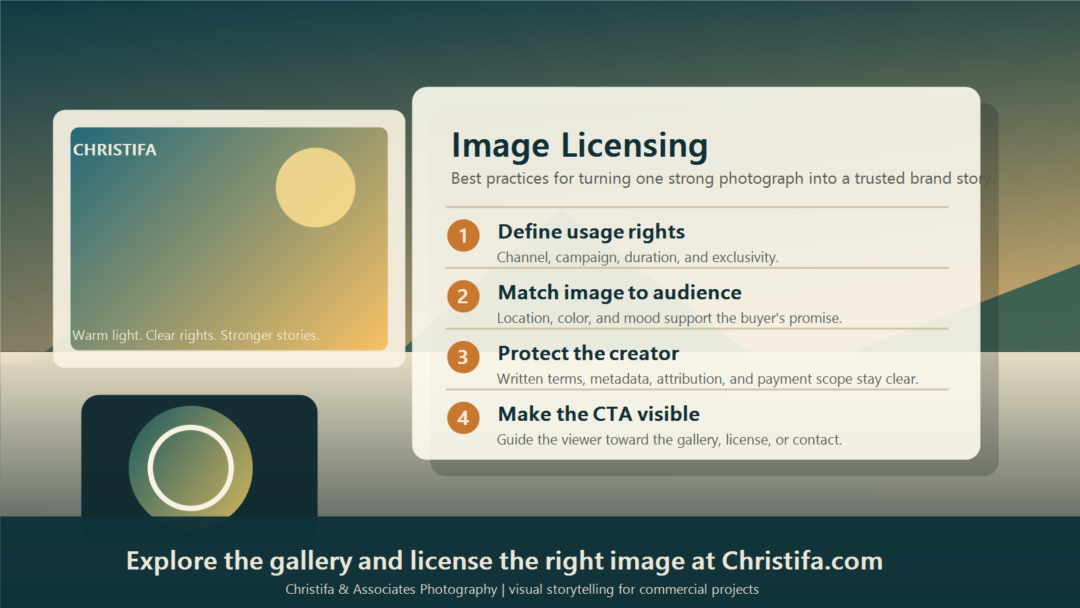
The image in this article presents licensing as a visual workflow. On the left, the framed landscape and camera lens represent the creative act of making a photograph. On the right, the structured guidance panel turns that creative asset into a usable business tool. This combination is the heart of professional image licensing. A photograph carries feeling, place, color, and story, but it also needs clear rights before it becomes part of a campaign.
Start With the Intended Use
The first best practice is to define how the image will be used before selecting the license. A photograph used in a private presentation has a different value from an image placed on a national advertising campaign. A website banner is different from a product package. A social media post is different from a billboard. Each use changes the reach, risk, and commercial value of the image.
For photography buyers, this means being specific. Name the channels where the image will appear. Define whether the image is for web, print, paid ads, organic social, email, packaging, editorial use, internal use, or resale. Clarify whether the use is local, regional, national, or global. When the use is clearly described, the licensing conversation becomes more professional and much easier to price fairly.
Define the Duration Before Publishing
Duration is one of the most overlooked licensing details. A brand may only need an image for a three-month campaign, while another company may want to use a photograph as part of its identity for several years. Those two uses should not be treated the same. A short campaign license gives a buyer access for a defined period. A longer license gives the buyer more value and should be priced accordingly.
Before publishing a licensed image, decide whether the use is temporary, seasonal, annual, or ongoing. If the image will remain on a website after a campaign ends, that should be included in the license. If the buyer wants the option to renew, that can be written into the agreement. Clear duration protects the buyer from accidental overuse and protects the photographer from having work used indefinitely without the proper rights.
Understand Exclusive and Nonexclusive Rights
Another important teaching point is the difference between exclusive and nonexclusive licensing. A nonexclusive license allows more than one buyer to license the same image. This is common for stock photography, editorial images, and broad commercial visuals. It keeps costs more accessible and gives the photographer more opportunities to earn from the same work.
An exclusive license limits who else can use the image. A brand might request exclusivity when the photograph becomes central to a campaign, product launch, or brand identity. Exclusivity usually costs more because it removes future licensing opportunities for the photographer or rights holder. The more specific the exclusivity is, the better. A license can be exclusive by industry, geography, channel, or time period. That precision helps the buyer get the protection they need without paying for restrictions they do not actually require.
Match the Image to the Audience
Licensing is also a creative decision. The right image should fit the audience, the message, and the emotional tone of the project. In the generated image above, the color palette uses deep teal, warm amber, soft cream, and grounded charcoal. Those colors communicate trust, warmth, clarity, and professional restraint. They are not random decorative choices. They help the image feel useful for commercial storytelling.
When choosing a licensed image, study the mood before studying the price. Ask whether the lighting supports the message. Ask whether the colors fit the brand. Ask whether the subject matter feels authentic to the audience. A beautiful photograph can still be the wrong image if it sends the wrong emotional signal. Strong licensing decisions begin with visual alignment, not just technical permission.
Protect the Creator and the Brand
Good licensing protects both sides. The creator receives recognition and compensation for the value of the work. The brand receives permission to use the image with confidence. This is especially important when images move across multiple teams. A marketing manager may download an image, a designer may crop it, a social media coordinator may repost it, and an agency may include it in paid advertising. Without clear licensing terms, the image can easily travel beyond its original permission.
Best practice is to keep the license terms with the project files. Save the invoice, agreement, usage notes, attribution requirements, expiration date, and any restrictions in a place the team can find later. If the image has model releases, property releases, or editorial-only limits, keep those details visible. The goal is not to slow creative work down. The goal is to prevent confusion after the image has already become part of a public campaign.
Use Alt Text and Captions With Care
Once an image is licensed and placed on a website, the supporting text matters. Alt text should describe the image clearly for accessibility and search context. A caption can explain why the image is relevant to the article or campaign. The file name should be clean and descriptive. These small details help the image work harder without making the page feel over-optimized.
For a photography website, this is especially important. A licensed image is not only a visual asset. It is also a teaching opportunity. The image can show composition, lighting, mood, commercial use, and brand purpose. When the surrounding text is thoughtful, visitors understand both the artistic value and the practical value of the photograph.
Make the Call to Action Part of the Visual Story
The call to action in the image sits at the bottom because that is where the viewer naturally arrives after reading the visual sequence. It does not interrupt the licensing lesson. It completes it. First, the image explains the best practices. Then it points the viewer toward the next step. This is a useful model for commercial photography and web content. The image should not only decorate the page. It should guide the viewer toward action.
For Christifa.com, that action is simple. Explore the gallery, choose the image that fits the story, and license professional photography with clear purpose. A good call to action should match the image. If the image teaches licensing, the call to action should invite licensing. If the image teaches wardrobe, the call to action should invite fashion or model imagery. The strongest visual content connects the lesson, the image, and the business goal.
Build a Repeatable Licensing Checklist
Every brand, agency, and content team should have a simple checklist before using a licensed image. Identify the image source. Confirm the rights holder. Define the allowed uses. Confirm the duration. Check whether exclusivity is required. Review any model or property release requirements. Save the license where the team can find it. Add proper credit if required. Set a renewal reminder if the license expires.
This checklist may feel basic, but it prevents costly mistakes. It also creates a more respectful relationship with photographers and visual artists. Professional image use is built on clarity. The more clearly a team handles licensing, the easier it becomes to use strong photography across websites, campaigns, galleries, product pages, and editorial content.
Final Thoughts for Better Image Use
The best image licensing decisions combine creative judgment with practical discipline. Look for photographs that support the brand’s message, then make sure the rights match the way the image will be used. Study the mood, color, composition, and audience fit. Then document the channel, duration, exclusivity, releases, attribution, and renewal needs. That is how a beautiful image becomes a reliable business asset.
Explore professional imagery and licensing options at Christifa.com.