Expression as the Center of the Frame
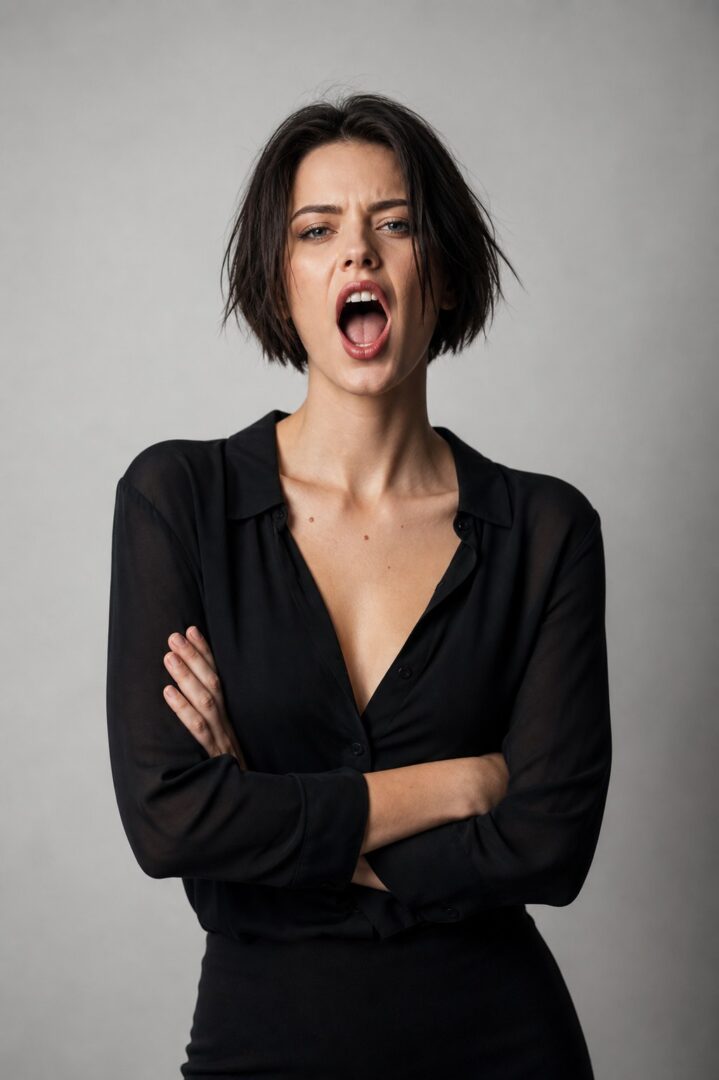
This portrait works because the expression takes control of the frame in a precise, intentional way. The open mouth performance expression communicates urgency, voice, and emotional force without relying on props, text overlays, or dramatic location styling. For photography teams and brand clients, this is a useful lesson. Expression can carry the story when wardrobe, lighting, and composition stay disciplined and clean.
The subject is presented in a simple studio environment with a neutral gray background and no visual clutter. That choice keeps the viewer locked on the model’s face, posture, and gesture. The black blouse and short dark hair add contrast while still preserving a commercial editorial tone. This is a strong setup for campaigns that need confidence, directness, and high emotional readability.
How Styling Supports an Expressive Portrait
Wardrobe is often underestimated in expression-focused portrait work. In this image, the black blouse serves a specific purpose. It removes color noise and lets skin tone, facial geometry, and gesture carry the visual impact. The fabric appears soft and slightly sheer on the sleeves, which adds depth and tonal layering without becoming distracting. The silhouette is clean, and the neckline remains structured enough to look editorial rather than casual.
When styling for expressive portraits, the best practice is to avoid busy prints and aggressive branding elements. Small details like texture, sleeve transparency, and collar shape matter more than logos or strong patterns. You want the wardrobe to support emotion, not compete with it. If the goal is a brand portrait for campaigns, this approach gives designers flexibility for crops, typography, and color grading while preserving a high-end photographic look.
Lighting Choices That Preserve Emotional Clarity
The lighting appears soft and directional, likely from a key source slightly off-axis with enough fill to preserve skin texture and eye detail. The result is a clean tonal transition across the face. Shadows remain controlled, and highlights do not clip. This lighting design keeps the portrait readable at multiple sizes, from full-screen hero placements to smaller editorial thumbnails.
For teaching and production teams, the practical rule is this. If expression is the subject, light for micro-detail. Preserve shape around the eyes, lips, and jawline. Avoid heavy contrast setups that bury facial nuance, unless the campaign explicitly calls for a harder dramatic style. In licensing contexts, images with balanced dynamic range tend to perform better because they adapt more easily across website themes, print outputs, and social channels.
Composition and Crop Strategy
This portrait sits in a vertical frame, which gives immediate strength for editorial layouts, story formats, mobile-first content, and profile-led brand assets. The framing captures head, shoulders, and upper torso with just enough breathing room around the subject. That spacing is crucial. It allows post-production teams to crop tighter for impact or wider for context while keeping the expression intact.
Notice how the crossed arms reinforce the emotional message. The gesture introduces structure and tension that supports the open-mouth expression. The portrait feels active, not passive. This type of pose direction is useful when the creative brief needs authority, urgency, or assertive voice. For portrait sessions, give subjects simple body anchors like crossed arms, hands near collarbone, or one shoulder forward. These anchors reduce uncertainty and help expressions read more naturally.
Licensing Decisions for Expressive Portrait Work
Expression-led portraits can be highly valuable in commercial licensing because they deliver emotional impact quickly. That value should be reflected in licensing terms. Before publishing or delivering a portrait like this, define usage channel, duration, territory, and exclusivity requirements. A social campaign license is not the same as a multi-year homepage placement. A local event promotion is not the same as a global brand rollout.
Model release status is equally important. Portraits with identifiable subjects require clean release documentation for commercial use. Keep that documentation attached to project records along with invoice details, approved usage scope, and expiration timelines. Teams that maintain these records avoid expensive confusion later, especially when an image performs well and gets reused across additional campaigns.
Metadata and SEO Best Practices
Strong image licensing and strong discoverability should work together. Use descriptive alt text, concise captions, and filenames that match the subject and teaching purpose. For this portrait, terms like expressive portrait photography, studio direction, and model licensing guidance create useful context for search and accessibility. Keep metadata honest and specific. Avoid keyword stuffing. A clear, accurate description helps users and search systems understand the visual intent.
When embedding portraits in teaching content, place the image near the top of the article and support it with practical analysis. Readers should quickly see what is being taught. Then they should receive workflow guidance they can apply to their own shoots. This structure improves engagement and gives the image a professional role beyond decoration.
Directing Talent for Controlled Intensity
Many photographers can light a portrait, but direction is what separates a technically clean shot from a memorable one. To produce controlled intensity, coach subjects with specific, actionable prompts. Ask for a vocalized breath shape, then hold it at half release. Ask for the eyes to stay steady while the mouth drives expression. Ask for one shoulder to sit slightly forward to create shape and tension. These cues produce repeatable results without forcing awkward theatrics.
During selection, compare frames for emotional precision, not just sharpness. The best frame is usually the one where expression, posture, and eye focus align for a single clear message. That clarity is what makes an image commercially useful and licensable across multiple contexts.
Building Reusable Portrait Assets
A strong expressive portrait can serve many business goals when licensed properly. It can anchor educational content, strengthen brand pages, support campaign storytelling, and provide high-impact assets for social distribution. The key is to package it well. Deliver the hero image, alternate crops, usage notes, release confirmation, and renewal schedule in one clear bundle.
For Christifa.com readers, this portrait demonstrates an important principle. High-impact photography does not require a complex set. It requires intention in expression, discipline in styling, precision in light, and clarity in licensing. When those pieces work together, one image can perform across channels while preserving artistic integrity and commercial value.
Call to action Explore and license professional portrait imagery at Christifa.com.