



Virtual Style With Human Presence
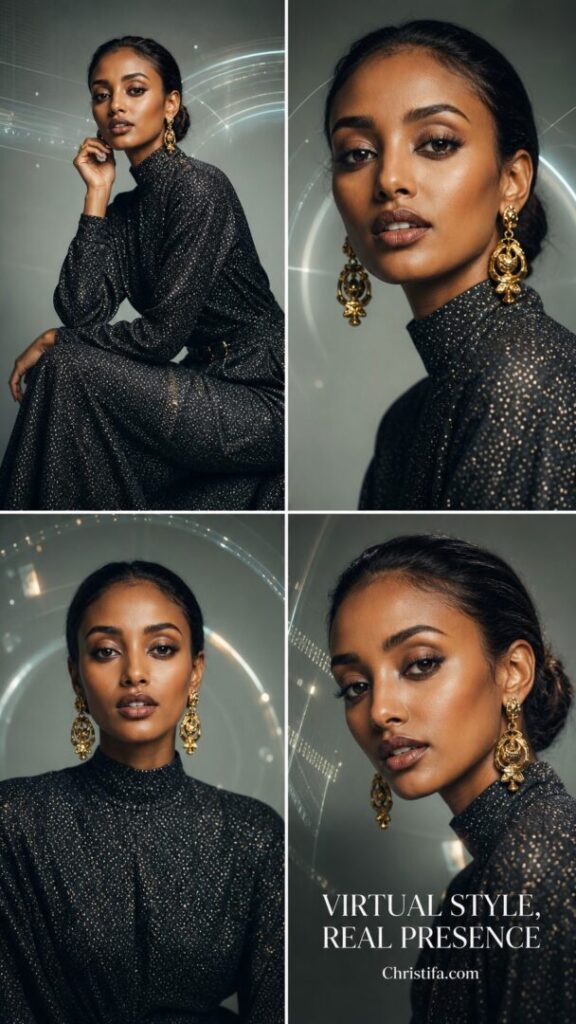
The image carries a simple message with strong commercial value. Virtual style only matters when real presence remains visible. In this four-panel editorial collage, an adult fashion model is photographed with luxury studio polish, sculptural gold jewelry, a shimmering dark wardrobe, and subtle virtual light arcs that suggest a VR fashion environment without hiding the person behind the technology. That balance is exactly where modern brand photography is moving.
The phrase Virtual Style, Real Presence works because it does not treat digital production as a replacement for human expression. It treats technology as a stage. The model still gives the image its force. Her eyes, posture, styling, and confidence remain the center of the story. The virtual elements add atmosphere, but they do not overwhelm the portrait. For Christifa.com, that is an important visual lesson for brands considering AI, VR, virtual production, and digitally assisted editorial campaigns.
The Four Panel Editorial Advantage
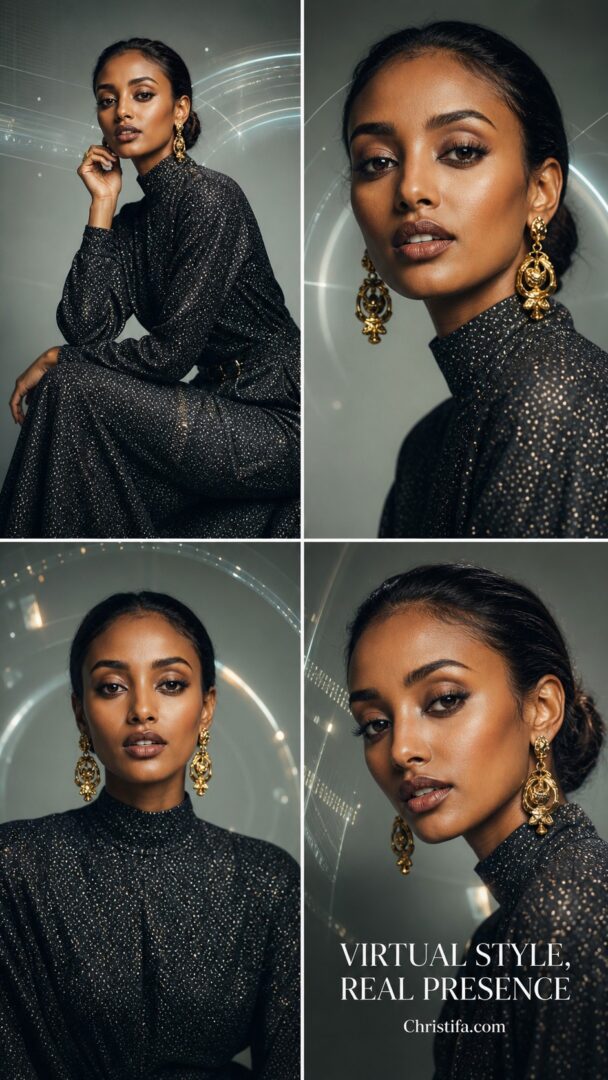
A collage format gives a campaign more than one way to read the subject. The seated three-quarter crop communicates fashion shape and wardrobe texture. The close-up panel emphasizes eyes, makeup, jewelry, and skin detail. The centered portrait gives a clean brand-facing image. The angled profile panel adds movement and drama while carrying the message text. Together, the four panels feel like a compact photo shoot rather than a single static post.
This is especially useful for social campaigns, gallery features, and licensing previews. A buyer can imagine multiple crops from one creative direction. A designer can pull a close-up for a hero banner, a full crop for an editorial article, or the message panel for a promotional tile. The image becomes a small visual system. That kind of flexibility increases licensing value because it gives the client more options without diluting the brand voice.
Fashion That Holds the Frame
The wardrobe choice is disciplined and effective. A dark high-neck silhouette with a micro-pattern shimmer creates a strong fashion surface while keeping attention on the face. The fabric catches small highlights that echo the virtual arcs in the background. That relationship between wardrobe and environment is important. The image does not merely place a model in front of a digital effect. It lets styling, lighting, and technology speak the same visual language.
Gold earrings bring warmth and sculptural detail into the composition. Against the gray-green studio tone and black fabric, the jewelry becomes a precise accent rather than an accessory overload. This is a best practice for editorial portrait styling. Choose one or two strong details and let them repeat through the frame. Here, gold adds luxury, black adds authority, and the virtual light creates a contemporary edge.
Why VR Inspired Portraits Are Trending
VR-inspired portraiture is trending because it gives brands a way to talk about innovation without abandoning beauty. Many technology images feel cold, abstract, or disconnected from people. Fashion imagery can solve that problem. When virtual-production cues are paired with strong model direction, the result feels future-facing and emotionally readable at the same time. Viewers understand the concept quickly because they see a person first and the technology second.
This matters for companies working in retail, beauty, gaming, digital events, creative services, education, and media. A polished VR-inspired portrait can support a launch, an editorial essay, a brand refresh, or a campaign about online identity. It signals that the brand is current, but it does not require the audience to decode a complicated technology diagram. The image simply says that digital space still needs style, presence, and taste.
Lighting as a Bridge Between Real and Digital
The lighting does important work in this image. Soft studio light preserves skin texture and facial detail, while the subtle digital arcs add atmosphere behind the subject. This combination keeps the portrait grounded. The viewer can believe in the model as a real person while also feeling the presence of an expanded virtual set. The best virtual-production imagery usually lives in this middle space. It should feel heightened, but not fake.
For photographers and creative directors, the practical takeaway is to light the person first. Technology effects should support the subject, not rescue the image. If the face, eyes, fabric, and jewelry are not strong before the digital atmosphere is added, the final piece will feel thin. In this study, the model direction is strong enough that the virtual cues become polish rather than distraction.
Commercial Uses for This Image Direction
A post like this can serve several commercial categories. It can introduce a fashion-forward technology story. It can support a beauty or jewelry campaign. It can work as a visual for articles about virtual identity, digital fashion, online presentation, or modern portrait licensing. It can also function as a branded social asset because the message is already embedded in the design. That makes it easy to share without needing a long caption to explain the concept.
From a licensing perspective, the image has strong adaptability. The text panel makes it ready for promotional use, while the other panels offer clean crops for editorial layouts. A buyer could use the full collage as a campaign post, or crop individual panels for supporting placements. The concept is specific enough to be memorable and broad enough to support multiple industries that want a stylish digital-forward tone.
Image Licensing Best Practices
When licensing a technology-inspired fashion portrait, clarity matters. Define whether the image will be used for web, social, advertising, event promotion, product storytelling, or editorial publishing. Decide whether the buyer needs exclusivity. Confirm whether the embedded message can be cropped, paired with additional text, or used as part of a larger campaign design. These details protect both the creator and the client.
Alt text and metadata should also remain specific. A phrase like VR fashion portrait is useful, but it is not enough by itself. Strong metadata should describe the model, four-panel collage structure, dark shimmering wardrobe, gold jewelry, virtual light effects, and the message in the image. This helps search, accessibility, and future asset management. A beautiful image becomes more valuable when it can be found, understood, and licensed correctly.
The Christifa Direction
Christifa & Associates Photography is strongest when the image feels useful beyond decoration. This portrait collage does that. It is stylish enough to stop a viewer, structured enough to teach from, and message-driven enough to support a post. It connects model photography, virtual-production language, fashion styling, and commercial licensing into one coherent piece.
The best brand images have a clear promise. This one promises that technology can be polished without becoming impersonal. It shows that a virtual shoot can still hold expression, texture, elegance, and cultural presence. That is the story inside the message. Virtual style may shape the set, but real presence is what makes the image worth remembering.
Call to action Explore image licensing, editorial photography, and visual storytelling assets at Christifa.com.