


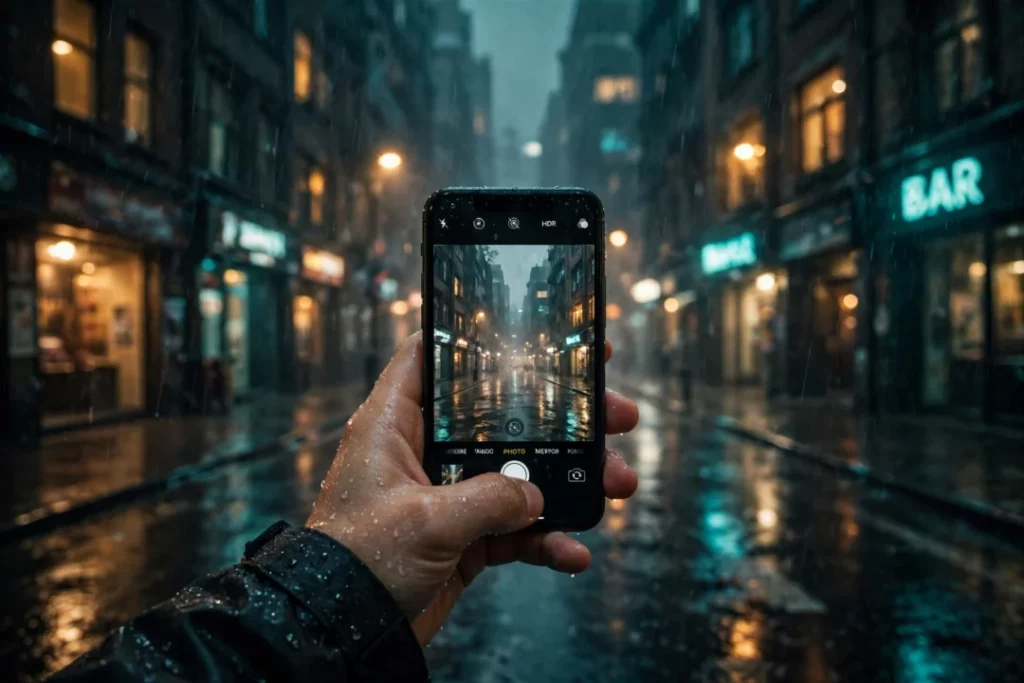
Most camera apps sell you a filter. Chromagraph Camera does something rarer: it throws away your iPhone’s picture before Apple has finished cooking it.
The app comes from director Rian Johnson (Knives Out, Glass Onion, Star Wars: The Last Jedi), who announced it on October 28 after, in his words, badgering his cinematographer into building his ideal iPhone still camera. That cinematographer is Steve Yedlin, who has shot every Johnson feature since Brick in 2005, working with color-science programmer Eric Cameron. Johnson originally wanted the app for himself — he takes a ton of pictures with his phone — and the team decided to release it to everyone. It had quietly reached the App Store on October 20, and Johnson’s announcement sent it climbing to the top of the paid Photo & Video chart.
Not a filter — a different pipeline
Here is the part that matters to photographers. A filter sits on top of processing your phone has already done. Chromagraph starts from the iPhone’s RAW sensor data instead, bypasses Apple’s standard look processing entirely, and renders the image with the same custom color science Yedlin uses on their films — its own handling of tone and color, plus film-style grain and halation around highlights. Around that signature look, you can still adjust color, tone, and texture yourself.
Yedlin has argued for years, in widely shared demos, that a film’s look owes more to how its images are processed than to which camera captured them. Chromagraph is that argument, shipped as an app.

The practical details
Chromagraph Camera costs $12.99 as a one-time purchase — no subscription, no in-app purchases — and requires iOS 17 or later. It shoots stills only: there is no video recording yet, though Johnson has said video could come later, likely limited to recent Pro iPhones. An Android version is not planned, because the processing would have to be adapted to a far wider range of hardware.
Why we’re paying attention
At Christifa & Associates we spend our days on exactly this question: where does a photograph’s look actually come from? Chromagraph’s answer — the pipeline, not the sensor — is a healthy reminder for anyone who shoots on a phone. For thirteen dollars, it is also the cheapest way we know to see what a feature film’s color pipeline does to your everyday pictures, shot with a stills-only discipline that slows you down in a good way.
Sources: 9to5Mac, Mac Observer, Slant Magazine.